


Raynaud's and Chilblains; How to manage them leading up to the Colder Months!

As we head into the colder months in Sydney, we start to see a noticeable increase in patients presenting with cold-related foot conditions—most commonly Raynaud’s phenomenon and chilblains.
While these conditions can be uncomfortable (and sometimes painful), the good news is that early prevention and simple management strategies can make a big difference—and this is strongly supported by clinical research.
What is Raynaud’s?
Raynaud’s phenomenon is a vascular condition where the small blood vessels in your toes temporarily narrow (vasospasm), reducing blood flow in response to cold or stress.
This exaggerated response has been well documented in vascular research, showing that people with Raynaud’s have increased sensitivity of digital arteries, leading to reduced circulation in the extremities (Herrick, 2012).
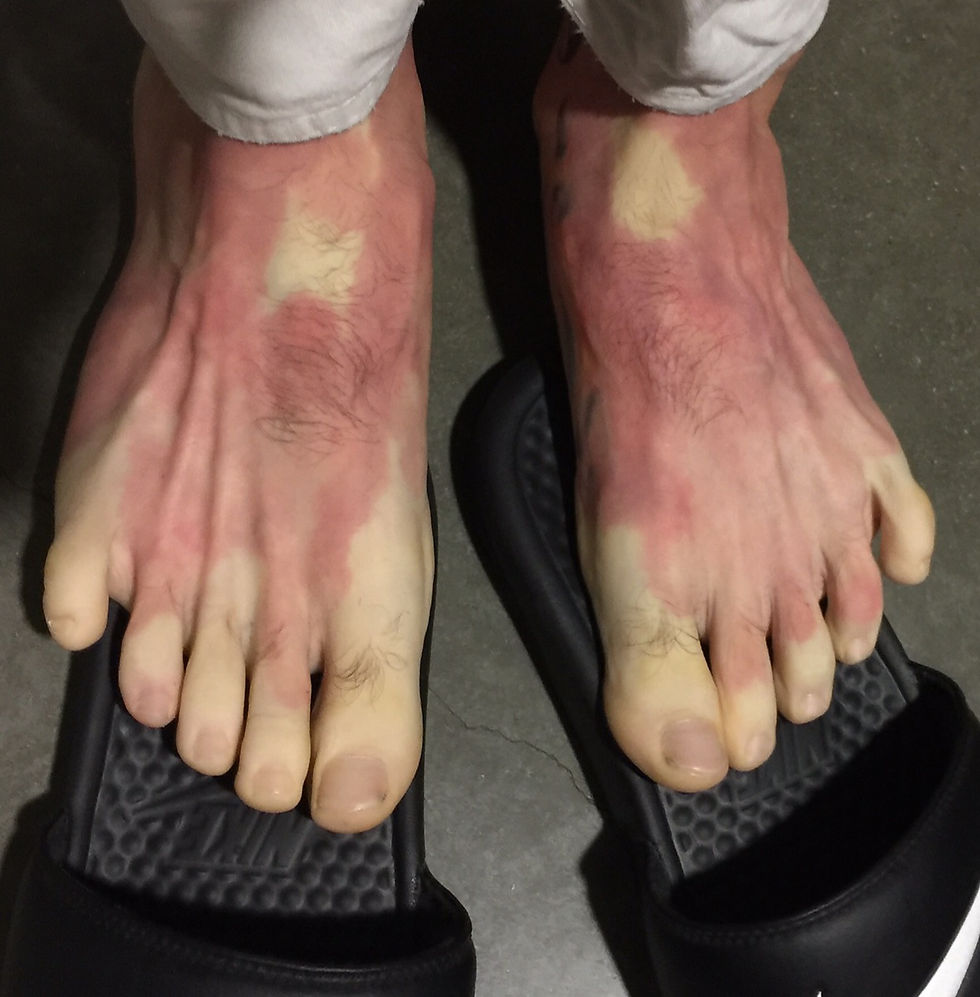
What you might notice:
Toes turning white → blue → red
Numbness or pins and needles
Cold, “dead” sensation in the toes
Pain as circulation returns
From a podiatry perspective, this reduced blood flow can affect skin integrity, wound healing, and overall foot comfort, particularly during winter.
What are Chilblains?
Chilblains (perniosis) are inflammatory skin lesions that develop after exposure to cold, damp conditions.
They occur due to an abnormal vascular response to cold followed by rewarming, causing leakage from small blood vessels into surrounding tissues and resulting in inflammation (Cappel et al., 2020).

Common signs:
Red, purple or swollen patches on toes
Itching or burning sensation
Pain or tenderness
Occasionally blistering or skin breakdown
Research shows chilblains typically develop 12–24 hours after cold exposure, making them a delayed but predictable response in susceptible individuals.
Why Your Feet Are More Vulnerable
At Hip to Sole Podiatry, we often explain that feet are particularly at risk because:
They are furthest from the heart, meaning circulation is naturally reduced
They are exposed to cold surfaces and environments daily
They are often enclosed in damp footwear, prolonging cold exposure
Studies on cold-induced vascular conditions confirm that reduced peripheral circulation and prolonged cold exposure significantly increase the risk of both Raynaud’s and chilblains (Dowd et al., 2021).
Patients with:
Poor circulation
Autoimmune conditions
Low body weight
The Link Between Raynaud’s & Chilblains
These two conditions are closely connected.Raynaud’s causes reduced blood flow, and when the feet are then rapidly rewarmed, this can trigger chilblains due to inflammatory vascular leakage.
Clinical studies highlight that individuals with Raynaud’s are more prone to developing chilblains, reinforcing the importance of early management and prevention.
How to Manage Chilblains and Raynaud's!
1. Keep Your Feet Warm — Gradually
Wear thermal or wool socks
Consider feet warmers
Choose insulated, well-fitting footwear
Avoid walking barefoot on cold floors
Rapid rewarming (e.g., heaters or hot water) should be avoided, as research shows it can worsen vascular instability and increase the risk of chilblains.
2. Keep Feet Dry
Moisture significantly increases heat loss.
Change socks if damp
Use moisture-wicking fabrics
Rotate shoes
Evidence shows that cold + damp environments amplify skin damage and vascular response, increasing susceptibility to chilblains.
3. Improve Circulation Daily
Movement plays a key role in prevention.
Walking regularly
Foot and ankle exercises
Avoid prolonged sitting
Even simple movements improve peripheral blood flow, which is essential in reducing Raynaud’s episodes.
4. Avoid Vasoconstrictors
Certain factors worsen blood vessel narrowing:
Smoking
Excess caffeine
Stress
These contribute to vasoconstriction, a key mechanism in Raynaud’s, and are widely recognised in vascular research as modifiable risk factors.
5. Protect Your Skin Barrier
Daily moisturising
Prevent cracks and dryness
Reduce infection risk
Maintaining skin integrity is essential, as compromised skin is more vulnerable to inflammation and delayed healing in cold conditions.
When Should You See a Podiatrist?
At Hip to Sole Podiatry, we recommend booking in if you notice:
Persistent pain or severe colour changes
Skin breakdown or signs of infection
Recurring chilblains each winter
Difficulty managing symptoms
Early intervention is important, particularly as research shows that ongoing vascular dysfunction can lead to more severe complications if left unmanaged.
Final Thoughts
Raynaud’s and chilblains are common during the colder months—but they are highly manageable with the right care.
By focusing on:
✔ Keeping feet warm and dry
✔ Supporting circulation
✔ Avoiding triggers
…you can significantly reduce symptoms and protect your foot health.
If you’re starting to notice changes in your toes as the weather cools down, it’s worth addressing early—prevention is always easier than treatment.


The article provides a detailed analysis of cold-related foot conditions, particularly Raynaud’s phenomenon and chilblains. It highlights how early management plays a critical role in prevention. While discussing prevention strategies, it's intriguing to consider how lifestyle choices, such as footwear and environmental conditions, can impact vascular health. This brings to mind how some recreational activities, like playing Fast Payout https://st-marys-wellington.school.nz/ in warm environments, might inadvertently lessen exposure to cold-related risks. Understanding these dynamics could enhance overall foot care strategies.
The article provides a thorough examination of cold-related foot conditions, particularly the connection between Raynaud's phenomenon and chilblains. It is interesting to consider how factors such as reduced circulation and environmental exposure directly influence these conditions. The mention of Royal Reels highlights a practical approach to managing symptoms. Understanding these underlying mechanisms is crucial for effective prevention and treatment strategies during winter months.
This article highlights the intricate relationship between Raynaud's phenomenon and chilblains, emphasizing the role of cold exposure and reduced circulation. The insights into how factors like moisture and footwear impact these conditions contribute to a deeper understanding of foot health. Moreover, the mention of Payid Pokies https://wrhpc.org.nz/ as a distraction could lead some to overlook these important concerns, but prioritizing prevention is essential for long-term well-being.
The article provides insightful analysis on cold-related foot conditions but misses deeper exploration of the interplay between lifestyle factors and vascular health. For instance, the mention of modifiable risk factors is essential; however, it could benefit from discussing how individual choices impact the severity of conditions like Raynaud’s and chilblains Speedau is one aspect that could enhance understanding of prevention strategies. Comprehensive approaches can lead to better outcomes.